

Cusco
Trekking Tours
- Inca Trail Machu Pichu 2 Day
- Inca Trail Trek 4 Day
- Huchuy Qosqo Trek 3 Day
- Ausangate Trek 6 Day
- Salkantay Trek To Machu Pichu 5 Day
- Salcantay And Inka Trail Trek To Machupicchu 6 day
- Choquequirao Trek 4 Day
- Chokekirao Machu Picchu 9 Day
- Lares Trek - Llama Trek 4 Day
- Vilcabamba Trek 8 Day
- Keros Trek 5 Day
Biking Tours
- Maras Moray
- Sacred Valley Of The Incas
- Machu Picchu Adventure
- Abra Malaga
- Mega Avalanche News
- Biking From Cusco To Puerto Maldonado Jungle
Horseback Riding
Classic Tours
ATV Tours


TREKKING AND CAMPING IN THE TO CHOQUEKIRAO RUINS $785 USD Per Person - Group Service
The Recently Discovered Inca Gold Refuge 4 Days - 3 Nights
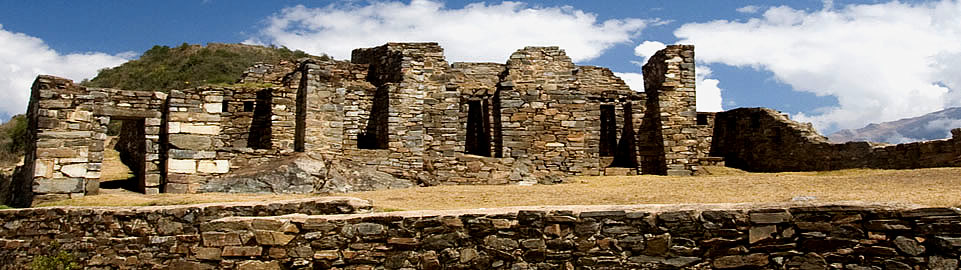
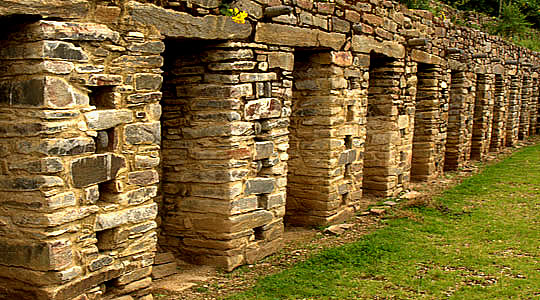
Choquequirao Complex is very interesting and one of the most popular treks in Cusco area. Choquequiraw is situated in the spur of the mountain range of Salkantay, over 3030M surrounded by the Apus of Yamana, Ampay, Chokecarpu, Pumasiyo and Panta, on the left bank of Apurimac River. In the time of the Incas, it was united and in communication with Machu Picchu by a complex network of trails. The reasons are many: The fantastic nature with valleys, snow-capped mountains and great variety of plants, birds and animals. Choquequiraw is considered as "The Last Refuge of the Inca Empire". Visitors can view a complex hydraulic system, most likely for domestic, ceremonial and agricultural use. The geographic location of Choquequirao in reference to other complexes of the same period would tend to indicate that its function was that of an Inca enclave toward the valleys of the Apurímac River. There are many similarities between Choquequirao and Machu Picchu. The latter was a sanctuary dedicated to the worship of the Inca Pachacútec; Choquequirao was also a sacred site, but one dedicated to other functions that could have had to do with war or with the surrounding apus. Each is located beside Mt. Salcantay and both are situated above, far above, a great river: in the case of Machupicchu, the Urubamba and in that of Choquequirao, the Apurímac.The ecotourism, fulfilling all the norms of conservation and control, will lead a sustainable development of the zone. The Inca trail to Choquequirao is encounters with the nature area that is without disturbance or contaminating, with a specific abject of admire and enjoy the landscapes along with sylvester plants, wild animals and cultural manifestations.
| 4 Day Choquequiroa Trek - Cachora Trek - Cokekirao Ruins - Trek To Choquekirao - Trekking And Camping In Chokequirao Ruins - Inca Trail To Choquequira - Information about choquequirao trek - Reviews About Trek To Choquequirao - choquequirao trek cost - ChoquequiraoTrek - ChoquekiraoTrail - General Information Of Trek To Chokekirao - Trekking To Chokequirao - Choquequirao Trail 4Days/3 Nights Trek - Tours To Chokekirao - Pictures About Ruins Of Choquequirao - Chokequiroa Trekking Tours |
CHOQUEKIRAO TREK ITINERARY
DAY 1: CUSCO - LIMA TAMBO RUINS - CACHORA - CHIQUISCA
At 5AM we pick up from your hotel and we leave from Cusco in our private van will take us to the town of San Pedro de Cachora(2800M) where you have plenty of time for breakfast for additional cost. Here we met the rest of our team (cook, horses and horse handlers). Begin the long trek which will take us between 7 to 8 hours. Along the way we will also be able to observe a diverse landscapes that belong to different climates such as Pedroyoc snow-capped, diversity of flora and fauna that embellish our walking. Today will trek 7 to 8 hours on the mountainous region. Finally arrive to el Capulichayoc Viewpoint, from where we will be able to observe the deepest canyon in the world which is known as the Apurimac and by where the majestic Apurimac flows. It is here where we will have our first lunch and from where is possible to see the first sights of Choquequirao. Will continue descending until CHIKISKA (1800M) where will set up the tents and spend night surrounded by majestic landscape (L - D).DAY 2: CHIQUISCA - MARANPATA - CHOQUEKIRAO RUINS
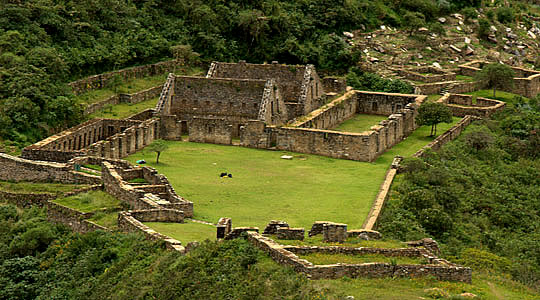
After a good breakfast we start our strenuous hike up hill for about 5 hours to our lunch stop at Marcapata and then completely guided tour of Chokequirao = "Golden Cradle" is considered the Sister City of Machu Picchu, as there are several similarities. It hangs 1500 meters above the Apurimac Canyon. Machu Picchu hangs above the Urubamba canyon. It is at the same latitude and it is a large citydel with more of 8 hectares, only one third has been uncovered and every day the archeologists find something else of interest. We will observe the three levels of the excavated ruin, where we can appreciate houses, terraces and other parts of this late Inca-town, like the ruin in progress of excavation.Camping next to Marcapata (B - L - D).
DAY 3: CHOQUEKIRAO RUINS - CHIQUISCA
At dawn we can see the sun rise over the ruins and after a good breakfast start back down for the same way we came in, until we reach our camp at Chiquisca (B - L - D).DAY 4: CCHIQUISCA - CACHORA - CUSCO
Today we will walk up at 6am to have early breakfast accompanied by first sun rising over the Apurimac canyon. The trek time to Cachora will take 5 to 7 hours depending of your physical condition. In Cachora we will met our private van to take us back to Cusco (B - L).CHOQUEKIRAO TREK INCLUDES
- Pick-up from customer hotel located in downtown of Cusco
- English speaking guide (two guides for groups over 8 persons)
- Shared transport from Cusco to Cachora (Group Service)
- Private van from Cusco to Cachora (Private Service)
- Entrance to Choquequirao ruins (one time)
- Horses to carry food and camping gear and backpacks
- Emergency horse to ride
- Experienced cook
- Cooking equipment
- Teatime everyday (coffee, tea, popcorn, biscuit)
- 4 capacity tent (four season tent) - 2 persons per tent with plenty space for backpacks
- Double thickness foam sleeping mattress
- All meals on the trail (3 breakfast - 3 lunches - 3 dinners)
- Water supply (boiled) after every dinner or breakfast
- Return by private van from Cachora to Cusco
- Kitchen and dining tent with camp tables and chairs
- Tents and food for our camp staff
- First aid kit and oxygen bottle for any participant and our camp staff
- Drop-off at your hotel at the end of the service
| CHOKEQUIRAO TREK RATE | ||
| DATE | TOUR | COST |
| Any day (Except January to March) |
TREKKING AND CAMPING IN THE TO CHOQUEKIRAO RUINS $785 USD Per Person - Group Service The Recently Discovered Inca Gold Refuge 4 Days - 3 Nights |
Group Service (Join a group) 1 to more participants $785 USD each one Private Service (Private guide) 2 participants $1423 USD each one 3-4 participants $1095 USD each one 5 to more participants $853 USD each one |
| Discount 3%: Tour Operators or Travel Agencies Only Students: $15 USD discount only with valid green ISIC card All prices stated above are subject to change |
||
| Organized Groups: We offer private trekking at any time departure | ||
| Group size: 8-12 participants per 2 guides | ||
| BOOKING: We highly recommended to book this trek prior you arrive to Peru | ||
EXCLUDED
- Backpack 65lt, if you plan to hire a horse take a big plastic bag to cover your personal backpack
- Sleeping bag can be hired from our office for $5 USD per day
- Rain jacket or poncho (plastic ponchos can be purchased in Cusco/Peru)
- Water bottle and purification tablets (Micropur are recommended and can be bought in local pharmacies in Cusco)
- Flashlight and batteries
- Selection of small snacks, chocolate, dried fruit, biscuits etc
- Hotel in Cusco
- Travel insurance
WHAT YOU NEED TO BRING/CARRY
- Original passport to be showed in the park control of the trail (day 1)
- Hiking boots (waterproof), sneakers is welcome to but for the rainy is not enough comfortable
- Sleeping bag -15ºC (this can be hired in our office for $5 USD per day with previous notification at booking time)
- Long pants or slacks
- Long-sleeved shirts to prevent you from the sunburn
- Sweaters and a jacket (something warm for the night)
- Rain wear or poncho for the rainy season December - April, but during the dry season can be raining too
- Camera with extra batteries
- Bottle of water, along the trail you can purchase a bottle of water for few coins more. Also you can bring purification tablets (Micropur can be bought in local pharmacies in Cusco)
- Snack (dried fruits, chocolates, etc)
- Insect repellent to protect you from mosquitoes & Sun block (sun protection cream)
- Hat and sun block to protect you from the sun
- Headlamp and batteries
- First Aid kit (Band-Aids, cotton, bandages, alcohol, aspirin, tablets for stomach troubles, medicines to avoid altitude sickness).
- Backpack of 40 liters or more to carry your personal items
- Plenty of complete change of clothing
- Gloves, scarf and wool socks
- Toiletries, towel and toilet paper
- Swimsuit for hot spring (only if time permit)
- Optional: Trekking Poles with rubber covers (No damage the Inca Trail), without rubber covers you CAN’T use them
- Optional: Binoculars if you like to appreciate birds along the Inca route
IMPORTANT
Every night keep everything locked up in your tents to prevent any problems with robberies.CHOQUEKIRAO WEATHER
Dry season (April – November)Day temperature 20ºC/35ºC
Night temperature 5 ºC/10ºC
Wet season (December – March)
Day temperature 17ºC/22ºC
Night temperature 0 ºC/7ºC
ADVICE FOR HIKERS
Is recommendable have yellow fiber vaccination (malaria) because you will be 3 days in the high jungle. We never hear news about problems with malaria in this zone but are better to be prepared.It is also important to be well acclimatized to the altitude for that try to spend 2 nights in Cusco (3400m) prior to do the trek.
LOCAL KIDS AND ADULTS
Along the way you will met many people, specially kids walking long distance to arrive at school and study 5 hours and they back home after maybe 30 minutes or 2 – 4 hours depending how far they live from the school. Normally they are son or daughter of poor farmers living on the mountains. We strongly recommend help us to give some present to them like pencils, notebook, dictionaries, toys, clothes (socks, gloves, hat, t-shirt, etc) and something to eat. We don’t recommend giving them things like candies, chew gun, soda, camping knife or money. If you really like to make picture of them, especially of adults we strongly advise you to ask first. If you don’t speak any word of Spanish language (español) coordinate with your guide to see if is possible to have picture of them. Local people don’t permit take picture of them, because they believe you taking their spirit on your camera.HIRE A PERSONAL HORSE AND HORSEMAN
Horses can carry up to 120Kg = $300 USD for the full duration of the tour ($75 USD per day). Each horse comes equipped with saddle and assistant who will provide food and care the horse every day.Riding a horse you will need to carry a daypack with your Camera, bottle of water, snacks, a fleece or something warm and a poncho in case of rain (unlikely in Dry season but as a precaution). Your bag will be waiting for you in your tent at campsites.
CONTACT US
For more information about the tour or you request a new date to departure for this tour, please contact us.... Some of our clients e-mail us saying our confirmation e-mails are placed to their spam folder rather than their inbox. We recommend to modify your JUNK or SPAM FILTER SETTINGS to receive our e-mail peruadventurestours@hotmail.com on the correct inbox. You may also want to add this email address to your list of known contacts. This will prevent our responses from being filtered into your Junk or Spam mail folder.
References Of Travel Guide Books To Peru
ADDITIONAL BOOKING SERVICES
- Camping Zone In Arequipa
- Bus Tickets All Over Peru
- Guided Tour Bus From Cusco To Puno
- Bus Transfer From Arequipa To Puno
- Bus Transfer From Colca Canyon To Puno
- Bus Transfer From Puno To Arequipa
- Airplane Tickets In Peru
- Railway Tickets In Peru
- Learn Spanish In Peru
- Rent A Car In Peru
- Rental Camping Gear In Peru
- Work In Peru
- Donation Program
PERU TRAVEL INFORMATION
- Embassies And Consulates In Peru
- Information Of South American Camelids
- Tips To Travel Around Peru
- Peru Adventure Magazine
- History Of The Incas And Tawantinsuyo Territory
- Inti Raymi Celebration In Cusco - The Festival Of The Sun God
- Travel Insurance To Peru
- Peruvian Government Taxes
- Travel Agent
PERUVIAN GASTRONOMY INFORMATION
- Peruvian Food
- History Of The Peruvian Cuisine
- Inca Cuisine
- Cuisine Of The Central Coast Of Peru
- Cuisine Of The Northen Coast Of Peru
- Cuisine Of The Andes Of Peru
- Cuisine Of Peruvian Jungle
- Art Culinary Of Arequipa
- Desserts And Sweets Dishes Of Peru
- Peruvian Recipes
- Peru Gastronomic Festivals
- Cultivation Of Ancient Plants Of Peru
- Coca Leaf
TYPICAL DRINKS OF PERU
- Peruvian Tour Guides ::
- Peruvian Tour Leaders ::
- Travel Link Exchange
ADVERTISE YOUR WEBSITE OR BUSINESS FOR $55 USD PER YEAR
BANNER/ LOGO (300 x 140 pixeles - jpg)For more information to advertise your website or business contact our webmaster at peruadventurestours@hotmail.com
WhatsApp +51 973842688
 |
|
 |
|

PERU ADVENTURE TOURS
Responsible And Sustainable Tourism
Authorized And Licensed Tour Operator by the Peruvian Ministry of Foreign Trade and Tourism
HIGHLY RECOMMENDED BY
Footprint South American Handbook - Footprint travel guide book - The Rough Guide To Peru - Footprint Peru Handbook - Thomas Cook Traveller Peru - DK Eyewitness Travel Peru - Le Petit Futé Pérou
AREQUIPA HEAD OFFICE - DOWNTOWN
At Melgar Street 308 - B [view location map]
WhatsApp +51 973842688
ADVENTURE CAMPING CENTER
Characato
CUSCO MAIN OFFICE
WhatsApp +51 959853447
WORKING HOURS
9AM - 5PM Monday to Saturday
E-MAILS
peruadventurestours@hotmail.com
peruadventuretours@gmail.com
info@peruadventurestours.com
https://www.peruadventurestours.com
The world is a book and those who do not travel read only one page.
Travel makes one modest; you see what a tiny place you occupy in the world.
In the spirit of the adventure we renew ourselves.
© PERU ADVENTURE & TOURS all rights reserved