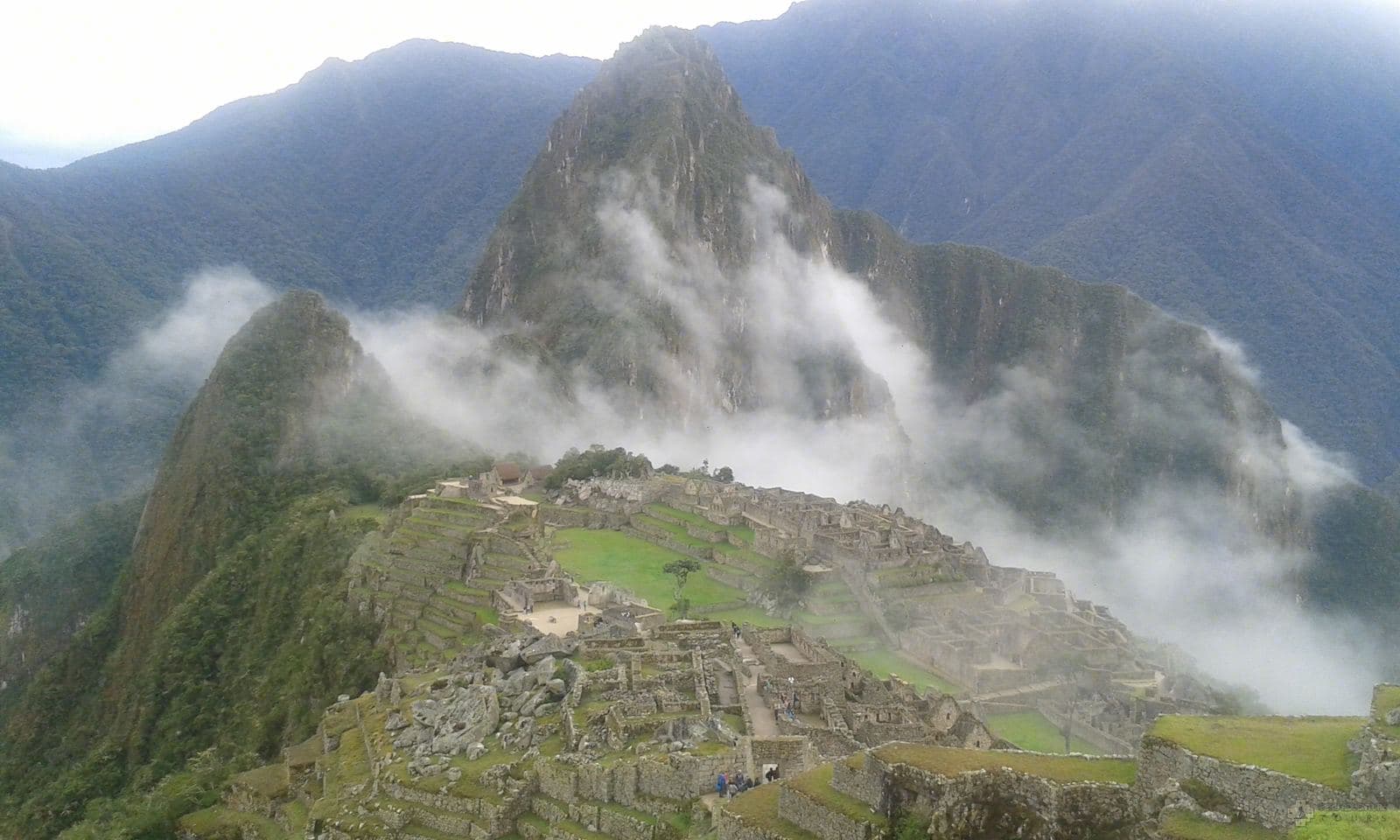
Hiking And Camping Through Ancient Paths 4 Days - 3 Nights
The Inca Trail / World Heritage Site UNESCO.
The most important Inca road was the Camino Real, as it is known in Spanish, with a length of 5200km (3230mi). It began in Quito, Ecuador, passed through Cusco, and ended in what is now Tucuman, Argentina. The Camino Real traversed the mountain ranges of the Andes, with peak altitudes of more than 5000m. El Camino de la Costa, the coastal trail, with a length of 4,000 km (2420mi), ran parallel to the sea and was linked with the Camino Real by many smaller routes. The Incas built a vast network of roads to be able to communicate with the four regions of their huge empire, the Inca road system was constructed in pre-Columbian South America. Traversing the Andes mountains and reaching heights of over 5000m (16500f) above sea level, the trails connected the regions of theInca empire from the northern provincial capital inQuito, Ecuador past the modern city of Santiago, Chilean the south.
The Inca road system covered approximately 22530km (14000mi) and provided access to over three million km² of territory. The networks were known as Qhapap Nan (the sovereign’s highway).There are remains of the Qhapaq Nan (The Inca trail) throughout Peru that are still used to this day by local farmers sometimes accompanied by pack animals, usually the Llama. The trails were used by the Inca people as a means of relaying messages, carried via knotted-cord Quipu. books, and by memory; and for transporting goods. Messages could be carried by Chasqui runners covering as much as 242km (150mi) per day. There were approximately 2,000 inns, or Tambos, placed at even intervals along the trails. The inns provided food, shelter and military supplies to the tens of thousands who traveled the roads. There were corrals for Llamas and stored provisions such as corn, lima beans, dried potatoes, and Llama Jerky. Along the roads, local villagers would plant fruit trees that were watered by irrigation ditches.
Today, hiking the Inca trail to Machu Pichu, the so-called “Lost City of the Incas”. There are many well-preserved ruins along the way, variety of eco-systems and dazzling scenery. The Inca trail is one of the world’s most important trekking and camping routes and is possible to get there in 2 days / 1 night or 4 days / 3 nights and find the altitude between minimum 2600m - 8528ft; maximum 4200m - 13776ft.
Our classical 4 days group service trek is the most popular trek to Machu Picchu. With this trek service you can join one of our groups and find variety of like-minded people from all over the world. This service is perfect for couples and small groups of friends.
Important: Concern about overuse leading to erosion has led the Peruvian government to place a limit on the number of people who may hike this trail per season, and to sharply limit the companies that can provide guides. As a result, advance booking is mandatory. A maximum of 500 people per day, including guides and porters, are permitted to begin the Trail every day. As a result, the high season books out very quickly.
Note: that the Trail is closed every February for cleaning.
INKA TRAIL TREK FAQS - Trail Permits for the Inca Trail To Machu Picchu
Itinerary
DAY 1: CUSCO - WAYLLABAMBA (12km)
The first day of the trek is relatively easy and serves as training for the days to follow. Travellers are collected early from their hotels (5:30 Am) and travel by private bus, past the villages of Chincheros, Urubamba and Ollantaytambo. It is a 3 hour trip to the trailhead at Kilometre 88. On the way there, we stop at the town of Urubamba or Ollantaytambo for about an hour to have breakfast (not included in the price).
Having arrived at km 88, hikers cross the Vilcanota River and follow the trail on the right as it climbs steadily up from the river. After passing through a small village, the ruins of the Inca hill fort of Huillca Raccay come into view high above the mouth of the river Cusy Chacca. From parts of this trail there are great views of the Urubamba mountain range and the snow capped peak of Veronica (5870m).
Here we also have a good view over the extensive Llactapata Inca ruins. Llactapata means "Upper town" in Quechua and was first discovered by Hiram Bingham in 1911. We continue hiking 8 km on the left bank of the river up to the small village of Wayllabamba "Grassy Plain", 3000m. We will eat dinner and spend the first night here.
DAY 2: WAYLLABAMABA - PAQAYMAYO (12km)
After breakfast, following the left bank of the Lluyuchayoc river for about 1 hour we climb up to three stones and cross a small bridge over the Wayruro river. There is a toilet facility. The stream is named after the Wayruro, an ornamental tree.
Hiking up 4½ hours, you will see spectacular views of Lluyucha Pampa (3680m). Continuing up you will get to the first and highest pass of the Inca trail, called Abra Huarmy Wañusca meaning "Dead Woman's Pass" (4200m). At the top hikers can celebrate having completed the most difficult section of the trail with a warm and delicious lunch. We then do an steady decent following the trail on the left side of the Paqaymayo valley. Our dinner and second campsite is at 3600 meters over sea level.
DAY 3: PAQAYMAYO - WYÑAY WAYNA (15km)
After breakfast we climb up for one hour to the ruins of Runkuracay. These small circular ruins occupy a commanding position overlooking the Paqaymayo valley. Another hour hiking we will be at the top of the second pass, called Abra de Runkuracay at 4000m. The descent down the steps from the pass is steep. This section of the trail is particularly beautiful as the path crosses high stone embankments and skirts deep precipices. After about one hour walking we will arrive at the pass called Sayaqmarca = "Inaccessible Town". This describes the position of the ruins perfectly, protected on three sides by sheer cliffs. No one knows the exact purpose of these ruins. After lunch, we level out into cloud forest full of orchids, hanging mosses, tree ferns and flowers, passing through an impressive Inca tunnel.
We then climb up to the 3rd pass called Puyupatamarca = "Town in the Clouds" (3700m). Here excellent views are offered of several snow-capped peaks, Salkantay Mountain (6180m) and Veronica Mountain (5750m). Access to the ruins is down a steep flight of stairs passing six Inca Baths, probably used for the water ritual.
Leaving the site via an impressive Inca staircase leading from the west side of the ruins, you will descend a thousand steps. Take care with your knees. After three hours walking through cloud forests you will arrive to Wyñay Wayna. This is our last campsite before Machu Picchu . There is a restaurant, a patio bar to buy drinks and well deserved hot showers.
That afternoon we go to the ruins of Wyñay Wayna "Forever Young". The ruins located on a nice slope comprise magnificent agricultural terraces. There are many buildings of quality stonework, suggesting that the site was probably a religious center associated with the worship of water.
DAY 4: WYÑAY WAYNA - SUN GATE - MACHU PICCHU (5km) - AGUAS CALIENTES - CUSCO
At 4am we will wake early, have breakfast and hike up to the last pass at to Inti Punku "Sun Gate" to get Machu Picchu before sunrise. From here you will appreciate Machu Picchu ruins, Wayna Picchu and the low canyon called Aguas Calientes. We will spend an hour watching a spectacular sunrise over the ruins.
Continuing down the trail to the best views of the ruins, you will have plenty of time to take photos of Machu Picchu. We then descend to the main entrance, where you can safely check your large backpacks. Following a guided tour for two hours of the major sections, you will have free time to explore the ruins alone or to climb to Wayna Picchu (2 hours to go up and down).
At 1:30pm the entire group together hikes down through low jungle and continue hiking on left bank of the river to Aguas Calientes. There you will have a short time to buy some lunch, drinks or go to the toilet. The train departs at 4pm you will return back to Cusco about 8pm.
Included
- Official English speaking guide (two guides for groups over 8 persons)
- Transfer from Cusco to Km 88 by private or shared tourist van
- Entrance to the Inca trail
- Entrance to Machu Picchu ruins (one day)
- Porters to carry food and camping equipment
- Experienced cook
- Cooking equipment
- Teatime everyday (coffee, tea, popcorn, biscuit)
- 4 capacity tent (four season tent) - 2 persons per tent with plenty space for backpacks
- Double thickness foam sleeping mattress
- All meals on the trail (3 breakfast - 3 lunches - 3 dinners)
- Water supply (boiled) after every dinner or breakfast
- Return train ticket from Aguas Calientes to Cusco (Backpacker train)
- Bus from Machu Picchu down to Aguas Calientes village (Not all tour operators include this service)
- Dining tent with camp tables and chairs
- Kitchen tent
- Porters insurance
- Accommodation and meals for our porters
- Trekking price include all local sales tax (19% as know IGV)
- First aid kit and oxygen bottle for any participant and our camp staff
WE HAVE DAILY DEPARTURE Please make your reservation 3 months prior you arrive to Cusco.
| TOUR SCHEDULE & COST 2008 | ||
| DATE | TOUR | COST |
| Any day (Except February) |
INCA TRAIL TREK TO MACHU PICCHU Hiking And Camping Through Ancient Paths 4 Days - 3 Nights |
Backpacker service (Join a group) 1 to more participants US$495 each Private VIP service (private guide) 2 participants US$1038 each 3-4 participants US$855 each 5 to more participants US$775 each |
| Discount 5%: South American Explorers Club Members Discount 10%: Tour Operators or Travel Agencies Only Students: US$25 discount only with valid green ISIC card |
||
| Organized Groups: We offer private trekking at any time departure | ||
| Group size: 8-12 participants per 2 guides | ||
| Booking: We highly recommended to book space prior you arrive to Peru | ||
Exchange rate US$1 = S/. 3.02 (rate may vary daily).
Above prices include local taxes.
[Inca Trail Trek permit availability 2007]
AVAILABLE DEPARTURE DATES 2008:
FEBRAURY: Inca trail (2 or 4 days) will be closed for maintenance, not available permit... sorry. Machu Picchu open all year.MARCH TO AUGUST is completly full, Not available spaces.
SEPTEMBER - OCTOBER - NOVEMBER - DECEMBER: Every Monday, Wednesday and Friday. If you have like to book for other day let know us to add the departure date. We recommend that you make a trek booking as early as possible with bank deposit of 80% and the final balance (20%) when you arrive in Cusco, one day before we will meet you in your hotel or you come to our local office.
IMPORTANT:
The Peruvian government has not announced the increase for Inca Trail permit price 2008; same is happen with the train company from Cusco to Machu Picchu (www.perurail.com). If any of costs listed above change to increase the cost of the trek permit and the train tickets we will update the new price on our website. We will notify by email all our clients affected by the price increase who will be liable for paying the increased cost of the Inca Trail trek upon arrival in Cusco.
After you fill the BOOKING FORM and you provide us the copy of your passport we will buy your Inca Trail trek permit using the same passport number that you send us with your BOOKING FORM. You must bring this same passport with you to the Inca Trail (departure date). If your passport number is different from the number on the Inca Trail trek permit the government authorities don’t will accept you to start the trek and also you will not be entitled to a refund.
If you like to stay an extra night in Aguas Calientes we can arrange any hotels. If you spend an extra night in Aguas Calientes we will book your train tickets to return to Cusco on the following day.
Departures
Daily departures are available all year, except every February. The Inca Trail is close for maintenance.
Private Service
With this service, we provide a private official tour guide and assistant to make your trip as comfortable as possible and you can explore much more every ruins in the old Inca trail and Machu Pichu complex.
Making a Trek Booking
Prior to making a reservation with Peru Adventure Tours it is important to read through our Inca Trail FQA`s (Frequently Asked Questions), there you will find answer any queries that you may have about this trek.INCA TRAIL FAQS
Not Included
- Optional entrance to the hot springs in Aguas Calientes (US$3 last day)
- 2 soles for towel to use in the hot spring
- Alcoholics drinks
- Porters to carry your personal items (see below)
- Sleeping Bag can be hired in our local office in Cusco US$5 per day
- Breakfast on the first day before to be collected from your hotel, if your hotel dont offer early breakfast service, we stop at Ollantaytambo village to have breakfasta for additional cost
- Lunch on the last day in Aguas Calientes before the train back to Cusco
- Tips for guide and camp staff
- Optional night in Aguas Calientes can be arranged easily
Stay an extra night at Aguas Calientes?
Stay an extra night at Aguas Calientes? Yes, if you want to stay an extra night in Aguas Calientes after Inca Trail Trek this can easily be arranged. We will purchase your train ticket to return to Cusco the following day. You need to let us know at the time of making the trek reservation so we can reserve your train tickets in advance. Obviously if you stay an extra night then you will have to pay for your accommodation.What You Need To Bring/Carry
- Backpack 65Lt
- Sleeping bag -15ºC (can be hired from our office for US$5 per day)
- Rain jacket or poncho (December - April)
- Strong comfortable and waterproof footwear
- One complete change of clothing (you can afford to carry more changes of clothing if you hire personal porters, see options below)
- Sweater and jacket (something warm)
- Bottle of water and purification tablets (Micropur are recommended and can be bought in local pharmacies in Cusco)
- Flashlight and batteries
- Hat or cap to protect you from the sun
- Sun block (sun protection cream)
- Insect repellent
- Toiletries, towel and toilet paper
- Selection of small snacks, chocolate, dried fruit, biscuits, etc
- Camera, plenty of film and spare batteries
- Swimsuit (if you plan on visiting the hot springs at Aguas Calientes after the trek)
- You also need to bring your original passport on the trail
- Optional: walking sticks or poles (rubber covers required in order not to damage the Inca Trail).
Inka Trail Weather
Dry season (April – November)Day temperature 20ºC/25ºC
Night temperature -1ºC/7ºC
Wet season (December – March)
Day temperature 17ºC/22ºC
Night temperature 4ºC/10ºC
PORTERS to carry up to 12Kg = US$120 (US$30 per day) for the full duration of the tour from Cusco to Aguas Calientes. Regarding porters who carry personal items. You will need to carry with you a daypack with your Camera, bottle of water, snacks, a fleece or something warm and a poncho in case of rain (unlikely in dry season but as a precaution) and anything you will need before lunch as porters do not walk alongside you. Your bag will be waiting for you in your tent at campsites.
Best to put everything up to 12kgs in one backpack for the porter so that you don´t have 2 large backpacks in your tent. We can provide you with a big rice sack that is not heavy but also not water proof so use plastic bags around your gear. The porters have large ponchos to cover them and the bag.
On day 2 you can hire a porter from the village of Wayllabamba to carry your pack over the pass to the second campsite approximately US$30.
IMPORTANT NEW TRAIL REGULATIONS INC (Instituto Nacional De Cultura) Please note the INC has confirmed a 50% increase on the Inca trail fee for trekkers and porters but from August not January 2007 as previously indicated.
A - Limited number of people can enter the trail each day (500 PEOPLE PER DAY) and hikers require permits obtained in advance by a licensed tour operator to do so.
B - Your passport details and ISIC student card if applicable must be presented to the UGM park control to obtain a permit. You most scan / fax your valid ISIC card at the time of booking and carry these documents on the trail or risk loosing your permit. YOUTH TRAVEL CARD or ISTC is not accepted by the control.
C - We have daily departures for the 4 day Inca trail (except in all February - the trail is closed) and from May to October (high season) you need to confirm your booking at least 3 months in advance if you do not have flexibility in a departure date.
D - For lower season dates November to April there are often many dates with permits available so just make your reservation (minimum 1 month before) through the website and confirm by email the deposit booking.


