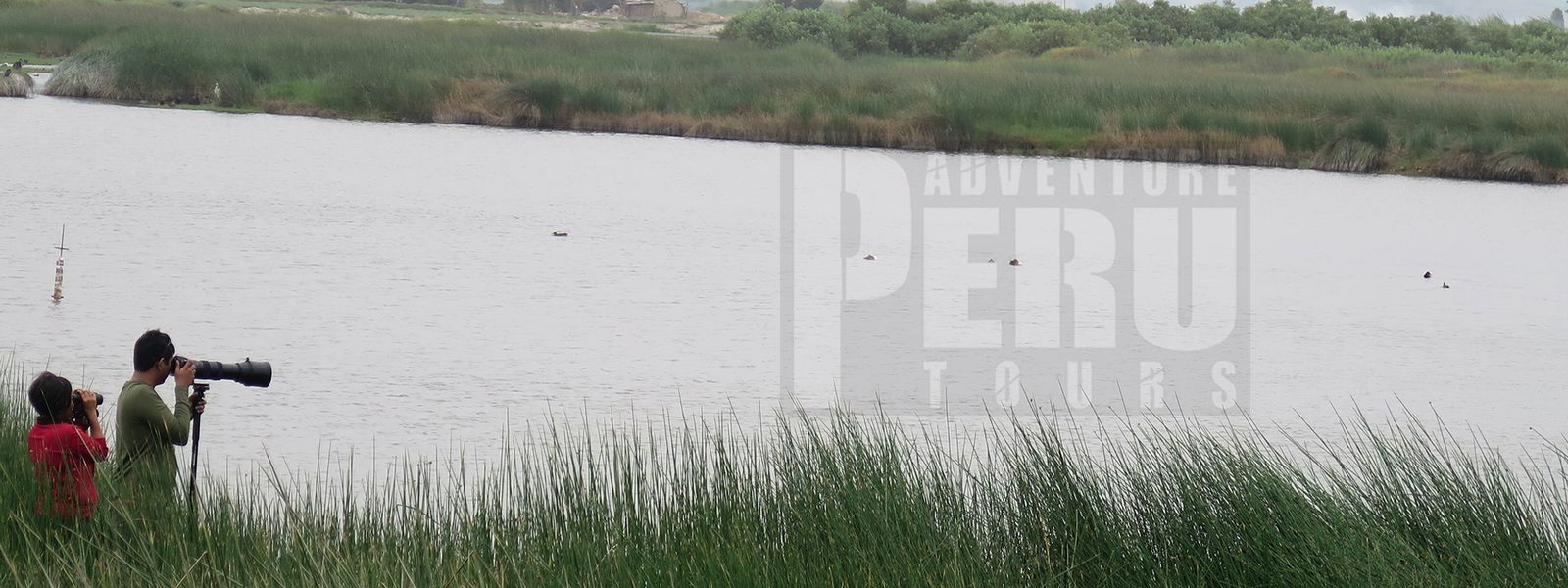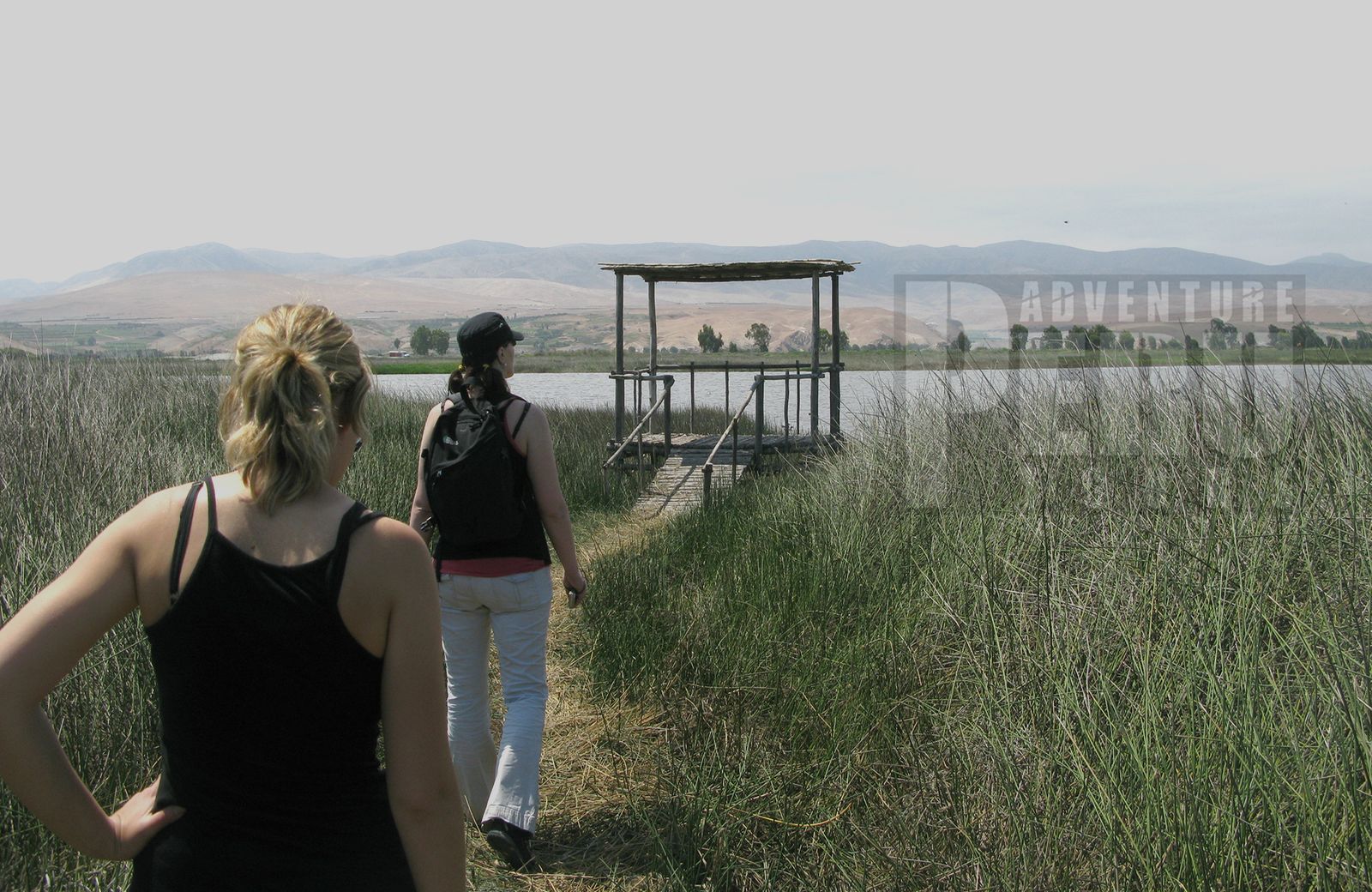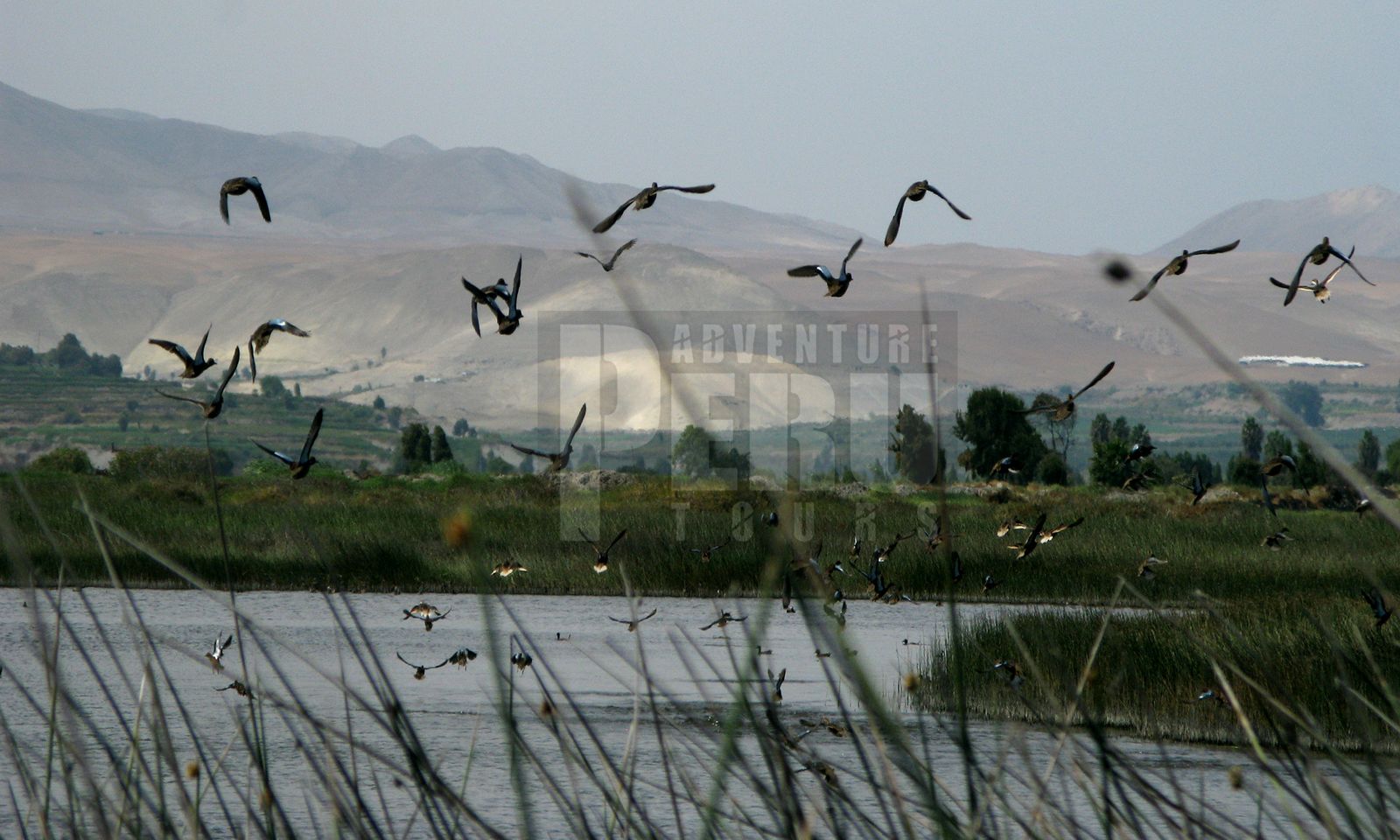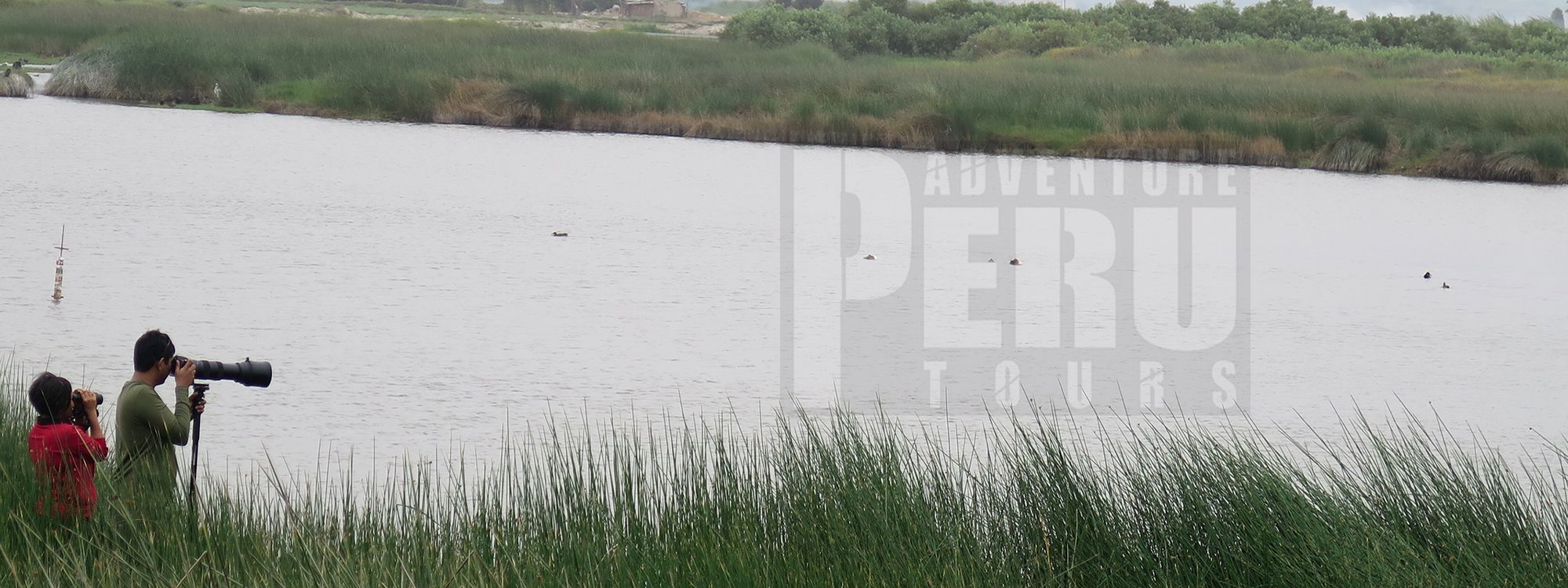
Lagunas de Mejia National Sanctuary is located on the southwest on Arequipa, just 140km away and two hours driving on paved road. Just 20 minutes more is the small coastal town as known Mollendo nearby of the sanctuary. The lagoon are located next of the Pacific Ocean, this place is protected area and refuge for migratory birds from all over the world.
The Mejia National Sanctuary was established on February 24th, 1984 (D.S.) N 015-84-AG, and is in the department of Arequipa, province of Islay with an area of 690.6 hectares surrounded by Tambo River. The main reason why the birds landed here is because the terrain provides lot food from the river, lagoon and the Pacific Ocean.
The sanctuary of Maejia is an 8km or 5mi stretch of coastal marsh, that attracts large flocks of domestic and migratory birds as the rare Parihuana (Chilean flamingo), the Peruvian Pelican, Black Skimmer, Franklin's Gull, Peruvian Pelican, Harri's Hawk, the American kestrel, the gaviota gris (Larus modestus), the playero blanco (Calidris alba), the rayador (Rinchops niger), the Peruvian Seagull (Larus belcheri), the Dominion Seagull (Larus dominicanus), the Gaviota Capucho Gris (Larus cirrocephillus), the Zambullidor Pimpollo (Rollandia rolland), the Zambullidor Grande (Podiceps major), the Pato Sutro (Anas flavirostris) the Pato Garantillo (Anas bahamensis), the Pato Colorado (Anas cyanopltero), the Polla de Agua (Gallinula chloropus), the Choca (Fulico americana), the Gallineta Comun (Rallus limicola), the Garza - Heroncuca (Ardea cocoi) the Big White Heron (Egretta alba), the Small White heron (Egretta thula) and the Blue Heron (Hydronassa caerulea). In total there are more than 190 species of birds that use the Sanctuario Nacional Lagunas de Mejia.
It possesses an area of 690.6 hectares and includes different habitats comprising swamps, Salt Marshes, Totora Reeds, hills, riverside estuaries, fields of salt grass, and sandy beaches.
It is an isolated ecosystem and the only vestige, between the north of Chile and Pisco, of the ancient flooded lands that were part of the American coast, drained for agriculture for centuries. In spite of being located at sea level and 170 S latitude, the annual average temperature in the Mejia Lagoons is usually 20ºC (68F), under the effect of the Peruvian (Humboldt) warm stream.
The lagoons are separated from the ocean by a large fringe of beaches and sandy pits. Within the protected area (690 hectares/1,704 acres), several habitats are grouped, including lagoons of different degrees of salinity, salt marsh, reed patches, salt mines and wild grass that form a complex ecosystem. This particularly valuable scenario homes 157 bird species, of which 72 are residents, 62 are regular visitors and 24 sporadic visitors.
Conservationist and investigation efforts are being made today to entirely preserve this natural treasure.
The purpose of this sanctuary is to protect the fauna and flora, and to promote tourism.
TOUR ITINERARY TO LAGUNA DE MEJIA BIRD SANCTUARY
The tour begins from the hotel of our customers by private transport and local tour guide. We take the Pan-American highway to southwest of Arequipa until we arrive to Cocachacra Valley, where we stop to visit all sugar factories named Chucarapi, short guided inside the factory to see how the locals process the black sugar. Continue traveling along the Tambo River we cross to the left bank and finally arrive to Mejia Lagoons, where is located the national bird sanctuary.
After we register our name on the guest book you will be introduced to the sanctuary beginning with explanation of the small museum. In this museum we will find a complete map of the each protected area and more details about each lagoon and detailed trail marked for nice walk birding more than 190 species living in this national bird sanctuary.
The walking bird tour in this sanctuary takes about 3-4 hours, also you can have plenty time to enjoy the beach and have picnic around the Pacific Ocean.
If time permit we continue walking on the shores to watch more migratory birds on this intangible area for fauna and flora.
Around 3 pm we aboard again the private transport and we drive to Mollendo and from there take a dirt road to the natural viewpoint as known Punta Bandurrias, this natural lookout is 200m high and the top is possible to observe the bay of Punta de Bombon and the countryside and the beaches.
Around 4pm return to Arequipa taking another paved road through the desert and around 6pm arrives to the hotel in Arequipa.
For more information about the birds in the Lagunas de Mejir sanctuary CLICK HERE.